
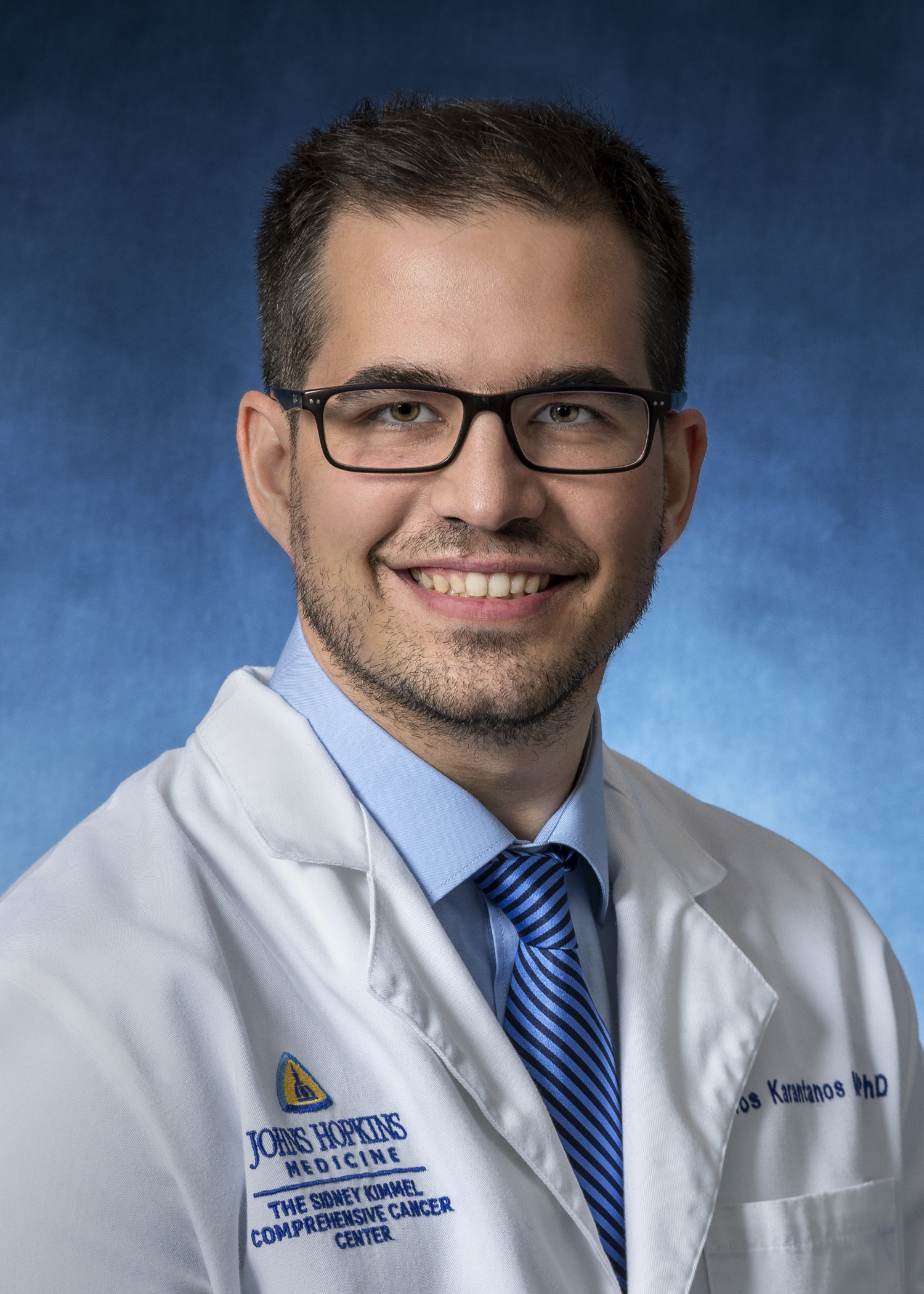
 Researcher - Theodoros Karantanos, M.D., Ph.D.
Facility - Johns Hopkins
Location - Baltimore, MD
Amount - $50,000.00
Biography: I earned my Ph.D. in cancer biology from the School of Health Sciences at the University of Athens, Greece. I subsequently completed a postdoctoral research fellowship in molecular oncology and cancer therapeutics at MD Anderson Cancer Center/University of Texas. My clinical training included residency and Chief residency in internal medicine at Boston University, followed by fellowship in medical oncology at Johns Hopkins. As a research fellow at Johns Hopkins, I investigated malignant hematopoiesis and discovered that CCRL2 is a key driver of MDS/sAML cell growth and a mediator of azacitidine resistance. Currently, I am an Assistant Professor of Oncology in the Division of Hematologic Malignancies at the Johns Hopkins University/Sidney Kimmel Cancer Center and serve as a laboratory-based physician-scientist focused on inflammatory signaling in the progression of high-risk myeloid neoplasms, including TP53-mutated disease. My laboratory develops antibody-based therapies and integrates gene editing (CRISPR-Cas9), signal transduction analysis, progenitor assays, drug and CRISPR-Cas9 knockout screens, and MDS/AML xenograft models.
Lay Description: Our lab has created a new medicine that attaches to a protein on the surface of blood cancer cells, called CCRL2. This medicine effectively kills cancer cells that are missing an important protein known as p53, which normally helps protect against cancer. Unfortunately, patients with this blood cancer subtype do not respond well to therapy and have currently very short survival. In this project, we are testing how well this medicine works and whether it is safe by giving it to mice with blood cancer. We will also compare our new medicine to current treatments used for blood cancers that lack p53, to see if it works better or has fewer side effects. We have discovered that combining our new medicine with other drugs—ones that prevent cancer cells from fixing broken DNA—makes the treatment even more effective. We will test this combination in both cancer cells in the lab and in mice. By finishing these studies, we hope to move our new medicine closer to use in patients and to find better treatment options for people with these difficult-to-treat blood cancers.
Do you like this page?